
…as EU, UNICEF donate 1m euros for fight against polio, FGM
By AGATHA N Uju, Correspondent, Abuja
The Nigerian government has expressed displeasure at the changes in global health funding, disrupting health efficiency across developing nations, as EU, UNICEF support efforts by the government to promote health of the citizens with 1.1 million euros.
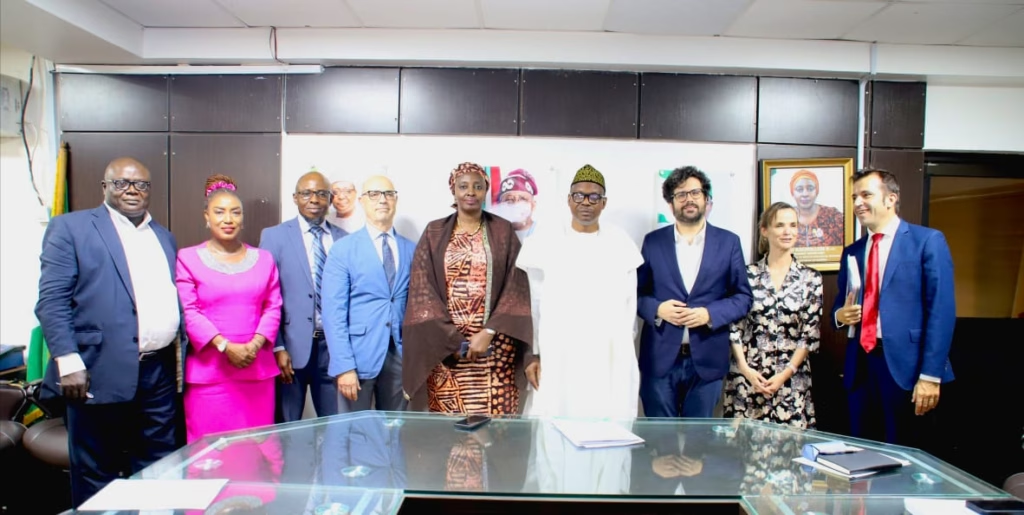
Minister of State for Health and Social Welfare, Federal Republic of Nigeria, Dr. Iziaq Adekunle Salako, stated this on Monday while receiving in his office, the Ambassador of Spain in Nigeria, Felix Costales Artieda, who led a delegation in a courtesy call.
Salako stressed that Nigerian government has prioritized its citizens’ health with a tailored reform, that targets citizens’ welfare, adding, “government must be in the driver’s seat for the health of Nigerians”.
“So, the concern with the changes around global health funding is a legitimate concern, and Nigeria is also concerned. But of course, we also realize that we cannot be dependent on anybody for the health of our citizens. We must take responsibility, and we must be in the driver’s seat for the health of our citizens, and that is what the direction of the government ought to take, is taking the health sector in Nigeria” Salako explained further.
The minister highlighted that the Federal government under the leadership of President Bola Ahmed Tinubu is undergoing health reforms through National Health Sector Renewal Investment Initiative, founded on four pillars as a transformation agenda for the health sector, noting it aligns with some of the initiatives of the Spanish Development Agency.
He noted that the meeting has opened window for the two countries to revisit the Memorandum of Understanding (MoU) signed in 2022 with a view to take action and practicalize some of its contents, citing transfer of technology as a key aspect of the memo aligns with the aspiration of the Nigerian government to unlock the healthcare value chain in our country, adding that local manufacturing is driven by the Presidential Initiative on unlocking the Healthcare Value Chain (PVAC).
In areas of obstetrics fistula and gynecology, Salako pointed out that Nigeria has taken a bold step to address some of these issues, by establishing specialized institutions to focus on obstetrics and gynecology, and also providing free treatment, including social integration, for people who have been identified or have suffered from obstetrics fistula and gynecology.
Salako said, ” Nigeria is very happy with this initiative of trying to awaken and make our relationship and health system more robust, more active. We welcome this, and I want to assure you that on our side, we will do everything possible to promote that partnership. Yes, it’s important that we do things more efficiently.”
Speaking earlier on behalf of the delegation, Mr. Anton Leis, Director of the Spanish Agency for International Development Cooperation said there is a number of multilateral initiatives by the Spanish Agency, adding that they have been working on with UNFPA on combating some practices like female genital mutilation, the eradication of polio in Nigeria.
He stated that they are already accomplishing fantastic new industrial materials for humanity, explaining that they are working with UNICEF and the EU actively supporting efforts to promote health efficiency and more and larger activity in the medical products industry in Nigeria, stating that 1.1 million euros have so far been contributed.
Anton applauded the Nigeria’s model under its Sector wide approach “We believe in that model. There is one plan, one budget, one important area, and I think this is fundamental”.
The Director said, to ensure health efficiency, they are working with the National Institute for Pharmaceutical Research and Development, the National Agency for Food and Drug Administration and Control, and the Resilient Initiative for Unlocking the Healthcare Value Chain.
The visit aimed at briefing the Nigeria government through the Federal Ministry of Health and Social Welfare, on the Programmes embarked upon, especially on Health by the Spanish Agency for International Development Cooperation In her welcome remarks, the Permanent Secretary of the Federal ministry of Health and Social Welfare, Daju Kachollom said Nigeria and Spain have a long standing relationship, recalling that the two nations have signed MoUs in 2022 and 2025, for collaboration.


